As a supplier of water quality instruments, we often hear clients say, “My sensors drift too quickly.” “Abnormal data causes monitoring results to be unreliable,” and “I spend too much time on maintenance and calibration. " If you have ever faced these challenges, you are certainly not alone. In the following context, we will delve into these common pain points, supported by detailed data, and demonstrate how real customers have successfully overcome these challenges by using our online sensors and controllers.
Common Water Quality Detection Problems & Data Insights
1. Sensor Drift & Calibration Drift
In long-term deployment applications, the readings of electrochemical sensors (such as pH, ORP, and dissolved oxygen) tend to drift by 0.1 to 0.3 units, or more, per month, particularly under conditions of dirt deposition or poor water quality. According to relevant guidelines from ASTM (American Society for Testing and Materials) and EPA (US Environmental Protection Agency), it is very common for the reference system of pH electrodes (such as Ag/AgCl) to generate a deviation of around 0.1 pH per month due to dilution, leakage, or poisoning of the electrolyte. If regular calibration and maintenance are lacking, 20% to 30% of the readings will become inaccurate or completely ineffective.
2. Outliers & Data Spikes / Noise
Due to factors such as fouling, biofilm growth, and power fluctuations, sensors deployed on-site often produce technical outliers—manifesting as data spikes, sudden drops in readings, or baseline drift. A technical framework applied to river-monitoring sensors in Australia demonstrates that, by employing automated outlier-detection algorithms, the system successfully captured sudden changes in parameters such as turbidity, conductivity, and water level, with an extremely low false-alarm rate.
3. Sensor Failures & Reliability Issues
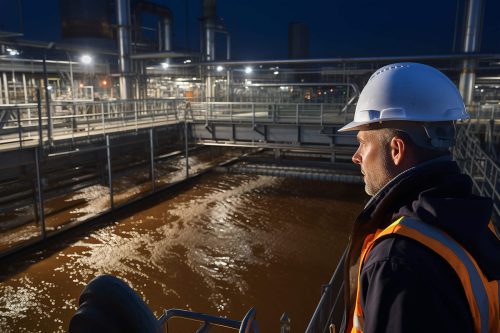
In many municipal water supply and drainage systems and industrial monitoring networks, sensor shutdown failure is a serious problem that needs to be solved urgently. For instance, a report from the UK disclosed that in the monitoring network of Thames Water, as many as one-third (approximately 33%) of the sewage overflow monitors were malfunctioning during a specific period, seriously weakening the reliability of real-time monitoring data.
4. High Maintenance & Labor Costs
Many water treatment plants and industrial facilities have reported that up to 20% to 30% of their operating budgets are spent on maintenance work such as sensor calibration, cleaning, replacement, and troubleshooting. The replacement costs of probes and reagents, labor costs, and losses caused by downtime for maintenance, if accumulated over time, will constitute an extremely high expense.
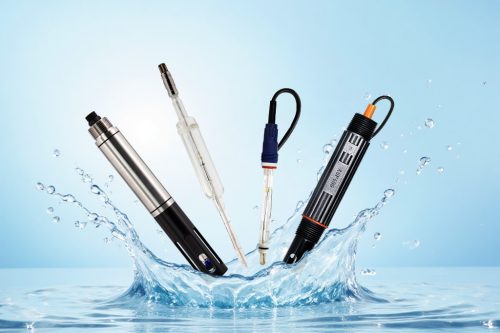
Faced with these challenges, customers have turned to robust and reliable solutions—that is, online sensors with digitization, self-diagnosis, self-cleaning, and stretchable functions. And those capable of seamless integration with controllers and data systems.
Real Case Examples: How Do Clients Overcome These Challenges?
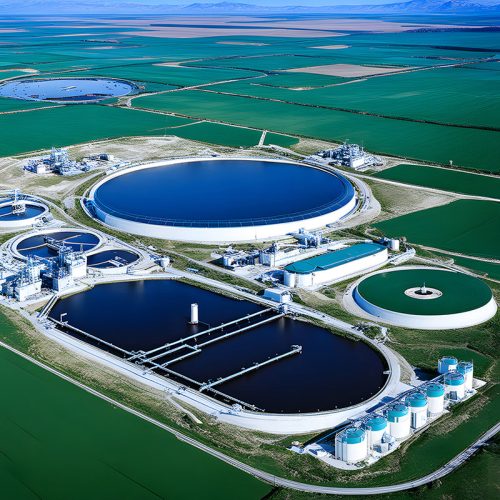
Wastewater Treatment Plant, California, USA (2023)
A medium-sized municipal sewage treatment plant has replaced its original manual pH and ORP probes with our digital online sensors and automatic calibration system. After six months of operation, the drift amplitude of the sensor has been reduced to less than 0.05 pH units per month. The number of alarms triggered by data mutations has decreased by 85%, and the manual working hours for sensor maintenance have also dropped by 60%. Customers' feedback: "Now we fully trust these data and no longer need to conduct frequent and repeated checks."
Food Processing Plant, Guangdong Province, China (2024)
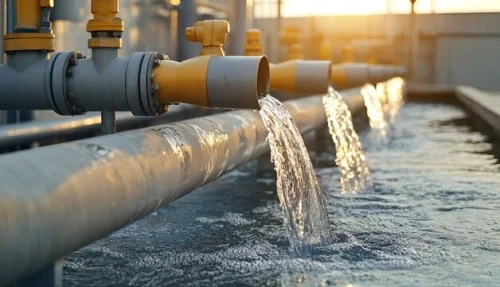
In a flushing/cleaning water pipeline, due to the frequent changes in the chemical composition of water quality, traditional sensors often experience daily drift. After deploying our integrated multi-parameter controller (covering pH, ORP, and conductivity), sensor drift faults were almost completely eliminated, process consistency was significantly improved, and the excessive consumption of chemical agents was reduced by approximately 12%.
Mining Leach Pad, Nevada, USA (2022–2023)
In an acid leaching process circuit, pH sensors are highly susceptible to contamination and can fail rapidly. For this purpose, we have provided a probe with a reinforced design, equipped with a retractable mounting sleeve and an automatic cleaning function. During the one-year operation, the plant successfully extended the sensor maintenance cycle from monthly to quarterly and improved pH control accuracy to ±0.08 units, thereby increasing metal recovery rate by approximately 0.7%.
Aquaculture Farm, Vietnam (2023)
An aquaculture operator struggled with DO sensor biofouling and drift. After installing our optical DO sensor with automatic cleaning and remote monitoring, sensor rejection alarms decreased by 90%, and fish mortality rates dropped 8% due to more accurate oxygen control.
The data is reliable and has practical guiding significance—say goodbye to repeated questioning and verification of readings
Reduce operational and maintenance (O&M) costs—decrease the frequency of manual calibration and shorten downtime
Reduce false alarms and data exceptions—achieve more precise and timely process control responses
Optimize the operational effectiveness of the process—comprehensively enhance output, compliance, and system stability
If you are also faced with challenges such as data drift, abnormal readings, heavy maintenance tasks, or unreliable data, please let us assist you. Contact us to make an appointment for an on-site investigation and experience for yourself how the modern online sensor and controller combination solution can completely solve these pain points for you.

 News · 07 Mar, 2026Are You Also Facing These Water Quality Monitoring Challenges?Saraceni tamen nec amici nobis umquam nec hostes optandi, ultro citroque discursantes quicquid per am...Read More