Chlorine Sensor, Meter & Controller: 5 Industries That Cannot Afford to Get It Wrong
Is Your Water Safe Right Now? The Case for Continuous Chlorine Monitoring
Most people assume that if water looks clear and passes treatment at the plant, it is safe to drink by the time it reaches the tap. The reality of what can happen inside a distribution network tells a very different story.
Case Study: Washington, D.C. — A Disinfectant Switch That No One Was Watching (2001–2004)
In 2001, Washington, D.C.'s water utility switched its secondary disinfectant from free chlorine to chloramines — a decision made to comply with new federal regulations limiting disinfection byproducts. The switch was technically compliant. What the utility failed to do was monitor what the change in residual chlorine chemistry was doing inside its aging distribution pipes.
Free chlorine maintains a stable protective oxide scale on the inner surface of lead pipes, preventing lead from dissolving into the water. Chloramines are chemically less oxidizing — and when they replaced free chlorine without any adjustment to corrosion control treatment, the protective scale broke down. Lead began leaching from an estimated 23,000 lead service lines across the city directly into residents' tap water — without a single alarm being triggered, because no one was continuously monitoring residual chlorine chemistry at the distribution network level.
By 2004, blood lead levels in D.C. children had risen significantly. Subsequent investigation revealed that at least 42,000 residents had been exposed to lead levels exceeding the EPA action limit of 15 parts per billion. The city initially failed to disclose the problem. The U.S. House of Representatives launched a formal investigation. Scientists later estimated the exposure may have contributed to an increase in fetal deaths in the district during the affected period.
The core failure was not a dramatic accident — it was the absence of continuous, real-time residual chlorine monitoring at critical points throughout the network. A properly deployed online free chlorine sensor system would have detected the shift in chlorine chemistry and its downstream effects on water quality long before lead reached residents' taps.
This is what residual chlorine monitoring is really about: not just checking a number against a limit, but maintaining continuous visibility into what your water is doing inside the system — every hour of every day.
Free Chlorine, Residual Chlorine & Total Chlorine — What Each Term Really Means
Three Forms of Chlorine in Water — and Why Getting the Terms Right Matters
In water treatment, "chlorine" is not a single measurement. It is a family of related parameters — and confusing them is one of the most common and costly mistakes in sensor selection and regulatory compliance.
Free Chlorine refers to the active disinfectant species present in water: hypochlorous acid (HOCl) and hypochlorite ion (OCl⁻). These are the forms of chlorine that directly inactivate pathogens. Free chlorine is the primary compliance parameter for drinking water treatment and swimming pool safety — it tells you how much disinfecting power is currently available in the water.
Residual Chlorine is a operational and regulatory term, not a chemical one. It refers specifically to the free chlorine concentration that remains at a given point in a distribution network — after the water has traveled from the treatment plant through kilometers of pipe, reacting with pipe walls, biofilms, organic matter, and dissolved metals along the way. Residual chlorine is what the WHO, EPA, and EU Directive 2020/2184 require utilities to maintain at network endpoints: a minimum of 0.2 mg/L at the point of delivery. The gap between the free chlorine measured at the plant outlet and the residual chlorine measured at the network endpoint is the chlorine decay — a critical operational metric that reveals the biological and chemical condition of the pipe network itself.
Total Chlorine is the sum of free chlorine and combined chlorine (chloramines). It represents the total oxidant load in the water, including forms of chlorine that have already reacted with nitrogen-containing compounds and lost most of their direct biocidal effectiveness. Total chlorine is the regulated compliance parameter for wastewater effluent discharge and certain industrial process water applications — because in these contexts, the combined chlorine fraction still contributes to the overall oxidant burden on the receiving environment.
Combined Chlorine (Chloramines) is the difference between total chlorine and free chlorine. It accumulates when free chlorine reacts with ammonia and organic nitrogen — from body waste in pools, from natural organic matter in source water, or from nitrification in aging distribution networks. Combined chlorine has only approximately 1/25th the disinfection power of free chlorine, yet it registers on total chlorine measurements, which is why utilities and pool operators who monitor only total chlorine can be misled into thinking their water is adequately disinfected when it is not.
| Parameter | What It Measures | Primary Application | Key Regulatory Reference |
|---|---|---|---|
| Free Chlorine | Active HOCl + OCl⁻ | Drinking water, pools | WHO 0.2–0.5 mg/L at point of delivery |
| Residual Chlorine | Free chlorine at network endpoint | Distribution network compliance | EPA MRDL 4.0 mg/L; WHO ≥0.2 mg/L |
| Total Chlorine | Free + Combined chlorine | Wastewater discharge, industrial water | EPA Clean Water Act effluent limits |
| Combined Chlorine | Chloramine fraction only | Pool air quality, nitrification monitoring | Pool standard: max 0.5 mg/L above free Cl |
The practical implication for sensor selection is direct: a free chlorine sensor and a total chlorine sensor are not interchangeable — even if they look identical and use the same amperometric measurement principle. Specifying the wrong sensor type for your regulatory requirement produces readings that are technically accurate but compliance-irrelevant — a result that satisfies no auditor and protects no one.
Online Chlorine Sensor vs. Chlorine Meter — Which Do You Need?
The terms "chlorine sensor" and "chlorine meter" are often used interchangeably in casual conversation — but they describe fundamentally different instruments designed for fundamentally different purposes. Choosing the wrong one for your application does not just create inconvenience; it can leave you with a compliance gap you did not know existed.
The Chlorine Meter — Portable, Reagent-Based, Point-in-Time
A chlorine meter (also called a portable residual chlorine analyzer or handheld chlorine tester) is a manual measurement device. The operator collects a water sample, adds a DPD reagent tablet or liquid, and the meter reads the resulting color change photometrically to report a chlorine concentration. The process takes 3–5 minutes per reading and produces a single data point at one location at one moment in time.
Chlorine meters are accurate, inexpensive, and genuinely useful — for what they are designed to do. Their primary roles are spot-check verification in the field, calibration of online sensors, regulatory grab sampling where continuous monitoring is not required, and troubleshooting when an online sensor reading appears anomalous.
The Online Chlorine Sensor — Continuous, Reagent-Free, Process-Integrated
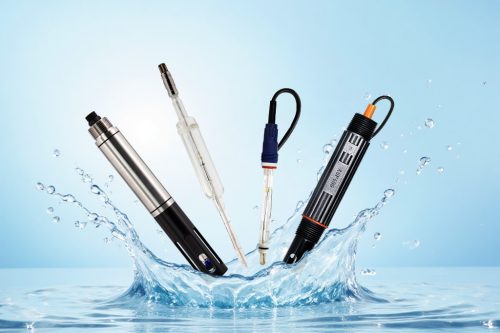
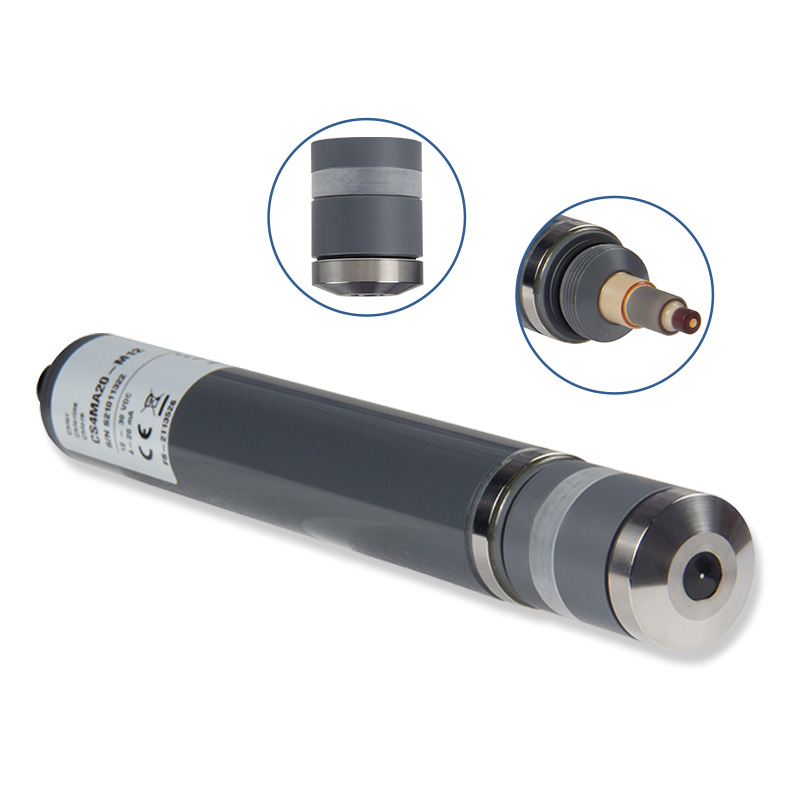
An online chlorine sensor is a permanently installed instrument that measures free or total chlorine continuously — typically generating a new reading every 5 to 30 seconds — and transmits a real-time signal to a controller, data logger, or SCADA system. It uses amperometric electrochemical measurement: chlorine molecules are reduced at a working electrode, generating a current directly proportional to concentration, with no reagent required.
Online sensors do not replace portable meters — they eliminate the gaps between them. In a municipal water plant operating 24 hours a day, chlorine demand fluctuates with flow rate, temperature, source water quality, and time of day. A manual reading taken at 8am tells you nothing about what happened at 3am, or what will happen at peak demand in the afternoon. An online sensor captures all of it.
When to Use Each — and When to Use Both
| Chlorine Meter | Online Chlorine Sensor | |
|---|---|---|
| Measurement type | Manual grab sample | Continuous, real-time |
| Frequency | 1–2x per day | Every 5–30 seconds |
| Method | DPD colorimetric | Amperometric electrochemical |
| Reagent required | ✅ Yes (DPD tablets/liquid) | ❌ None |
| Response time | 3–5 minutes | < 60 seconds |
| Installation | Portable, handheld | Fixed, flow cell or immersion |
| Output | Visual display only | 4–20mA / RS485 / Modbus |
| Automation | ❌ Manual only | ✅ Drives dosing controller |
| Data logging | ❌ Manual record | ✅ Continuous audit trail |
| Regulatory compliance | Grab sample verification | EPA Method 334.0 continuous monitoring |
| Typical cost | Low (instrument + reagents) | Medium (instrument, no reagents) |
| Best for | Spot-check, calibration, field verification | 24/7 process control, compliance monitoring |
In most professional water treatment environments, the two instruments are used together: the online sensor handles continuous process monitoring and automatic dosing control, while the chlorine meter is used weekly or monthly to verify the online sensor's calibration against a known reference method. This combination satisfies both the operational need for real-time control and the regulatory requirement for documented reference method verification.
For a detailed explanation of how amperometric chlorine sensors work, including electrode reactions and membrane vs. membrane-free design, see our complete guide: Disinfectant Sensor & Controller: A Complete Guide to 6 Types of Water Disinfection Monitoring
Do You Konw 5 Industries Where Chlorine Sensors & Controllers Are Non-Negotiable?
1. Municipal Drinking Water Treatment
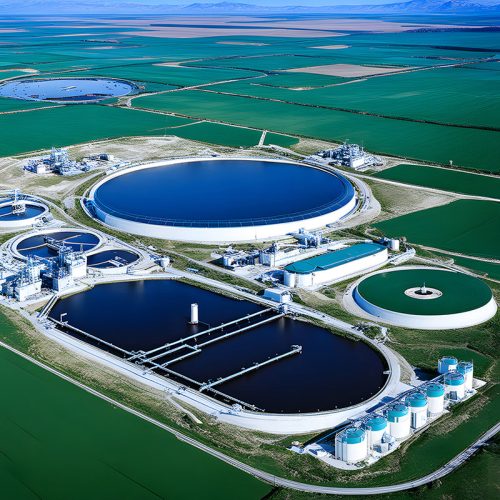
Municipal drinking water distribution is where residual chlorine monitoring carries the greatest public health stakes. A treatment plant may dose chlorine correctly at the outlet — yet deliver water with dangerously low residual at network endpoints kilometers away, as the Washington D.C. case in Section 1 demonstrated. The core problem is that chlorine does not travel passively through a pipe network. It decays continuously, reacting with pipe walls, biofilm, dissolved organic matter, and corrosion products along the way — at rates that change with temperature, flow velocity, and source water composition.
Plant Outlet to Network Endpoint: The Residual Chlorine Gap
In practice, water utilities deploy online free chlorine sensors at two minimum points: the treatment plant outlet and representative distribution network endpoints. The difference between these readings defines the network's chlorine decay profile — a live indicator of pipe condition, biofilm activity, and the effectiveness of corrosion control treatment. In systems with aging infrastructure, this gap can be substantial enough that water leaving the plant at 1.0 mg/L arrives at distant endpoints below the WHO minimum of 0.2 mg/L, triggering both compliance violations and the kind of pipe corrosion chemistry that caused the D.C. lead contamination event.
Where decay is significant, booster chlorination stations at intermediate network points maintain residual throughout the system. Each station pairs an online residual chlorine sensor with a dedicated dosing controller — forming a closed loop that continuously measures, compares against the target setpoint, and adjusts chemical feed automatically. Portable residual chlorine meters are deployed alongside for weekly calibration verification and during emergency response events, where field operators need immediate on-site readings independent of the fixed monitoring infrastructure.
Multi-Parameter Control for Network-Wide Compliance
Modern municipal installations deploy multi-parameter controllers that simultaneously manage free chlorine, turbidity, and pH across multiple network points. Turbidity spikes — triggered by main breaks, pressure transients, or post-storm raw water quality shifts — consume chlorine rapidly and unpredictably. Integrating turbidity monitoring into the same controller as the residual chlorine sensor allows the system to detect these events and increase dosing automatically, before residual drops below the EPA Method 334.0 compliance threshold. The controller's continuous data log provides the documented audit trail that regulatory authorities require for distribution system compliance reporting.
2. Swimming Pools & Aquatic Facilities
Swimming pools compress the challenges of water treatment into a small, intensively used volume where conditions change minute by minute. Bather load fluctuates through the day, body waste continuously consumes free chlorine, sunlight degrades residual in outdoor facilities, and pH drifts as carbon dioxide enters and leaves the water. No fixed dosing schedule and no twice-daily manual chlorine meter reading can track these dynamics — which is precisely why automated online monitoring is the operational standard for commercial and public aquatic facilities worldwide.
The Three-Parameter System: Chlorine + ORP + pH
Effective pool water management requires three simultaneous measurements feeding a single multi-parameter controller. Free chlorine concentration provides the direct compliance reading — the number that must sit between 1.0 and 3.0 mg/L in most jurisdictions. ORP provides a real-time composite indicator of actual disinfection effectiveness, reflecting not just chlorine concentration but the electrochemical balance of the entire water body — a reading that responds to changes in bather load and water chemistry faster than a concentration sensor alone. pH governs how effectively that free chlorine actually works: at pH 7.2, approximately 66% of free chlorine exists as the highly effective HOCl form; at pH 7.8, that proportion drops below 30%. Without active pH control, the same free chlorine reading can represent less than half the disinfection power.
The multi-parameter controller receives all three inputs simultaneously and drives two independent dosing outputs — a chlorine dosing pump and a pH correction acid pump — adjusting both in real time to keep the water chemistry within the target window through peak and off-peak operating periods alike.
Combined Chlorine Monitoring and Automatic Superchlorination
As free chlorine reacts with nitrogen-containing compounds from swimmers, it forms combined chlorine — chloramines — that cause the characteristic pool odor, irritate eyes and respiratory tracts, and signal that free chlorine is being consumed faster than it is being replenished. Monitoring the difference between total chlorine and free chlorine readings reveals combined chlorine accumulation in real time. When this gap exceeds 0.5 mg/L, the controller automatically triggers a superchlorination cycle, breaking down chloramine buildup before it reaches levels that affect swimmer comfort or trigger a health authority inspection. Portable chlorine meters remain essential in this environment for daily opening checks, independent spot verification, and the documented manual records that many national pool regulations require alongside continuous online monitoring data.
3. Wastewater Treatment & Industrial Discharge
Wastewater treatment plants occupy a unique position in the chlorine monitoring landscape: they must apply enough disinfectant to meet effluent pathogen limits at the point of discharge, then immediately remove virtually all of it before that effluent enters a receiving waterway. Too little chlorine at the discharge point means a regulatory violation under the EPA Clean Water Act or the EU Urban Wastewater Treatment Directive. Too much chlorine in the receiving water kills aquatic life — and triggers a separate set of environmental enforcement actions.
Effluent Disinfection Compliance Monitoring
Online residual chlorine sensors installed at the final effluent discharge point provide the continuous measurement record that environmental regulators require. Flow rates at wastewater plants vary enormously — between dry-weather base flow and post-storm peak events that can increase throughput by a factor of three or more. A fixed chlorine dose that achieves compliance at base flow will under-disinfect at peak flow and over-disinfect when flow drops back. A dosing controller receiving real-time flow data alongside the chlorine sensor signal applies flow-proportional dosing — automatically scaling chemical feed to match the actual volume of water being treated, maintaining compliant residual across the full range of operating conditions.
Dechlorination Monitoring — Protecting the Receiving Environment
Where treated effluent discharges to rivers, estuaries, or coastal waters supporting sensitive aquatic ecosystems, a second online chlorine sensor downstream of the dechlorination point confirms that sodium bisulfite or metabisulfite dosing has reduced residual chlorine to near-zero before discharge. Even residual concentrations below 0.1 mg/L are acutely toxic to fish and invertebrates at typical effluent discharge volumes. The dechlorination controller maintains this near-zero target automatically, and portable residual chlorine meters are used during routine compliance sampling and during the commissioning of new dechlorination systems to verify sensor accuracy against a reference method before the system goes live.
4. Food & Beverage Processing
In food and beverage manufacturing, chlorine appears at multiple points in the production process — and the requirements at each point are different enough that a single monitoring approach cannot cover them all.
CIP System Verification — The Final Rinse Problem
Clean-in-Place systems disinfect product-contact surfaces using chlorine-based solutions, then rinse with clean water before the next production run. The critical measurement point is the final rinse return — the moment when the last wash water exits the system. Residual chlorine in final rinse water must be below the threshold permitted for food contact surfaces in the relevant jurisdiction: in the United States, the FDA permits residual chlorine in food processing rinse water at levels that will not adversely affect the food, while the EU sets specific limits under Regulation (EC) 852/2004. An online free chlorine sensor at the CIP return line measures this in real time, with the controller holding the rinse cycle open until residual drops to the permitted level — preventing both product contamination from excessive chlorine carry-over and premature release of an insufficiently rinsed line.
Process Water and RO Membrane Protection
Many food and beverage facilities produce their own process water through reverse osmosis purification. Municipal supply water arrives with residual chlorine — essential for distribution network protection — but chlorine at even low concentrations degrades polyamide RO membrane materials, causing irreversible performance loss and generating costly replacement schedules. An online free chlorine sensor immediately upstream of the RO system provides continuous protection, triggering automatic dechlorination dosing or raising an alarm if breakthrough occurs. Portable chlorine meters are used here for daily pre-shift verification checks and for the documented HACCP control point records that food safety auditors require at each critical monitoring location.
Multi-Parameter Monitoring for HACCP Compliance
A multi-parameter controller integrating free chlorine, conductivity, and temperature measurements at CIP circuit return points provides the complete dataset required for HACCP critical control point documentation — demonstrating in a single continuous record that the correct disinfectant concentration was present at the correct temperature for the required contact time during every cleaning cycle.
5. Industrial Cooling Water & Legionella Control
Industrial cooling towers create conditions that are almost uniquely favorable for Legionella growth: warm water temperatures between 25°C and 45°C, large recirculating water volumes, continuous aerosolization that can carry bacteria into human breathing zones, and complex pipe networks where stagnant zones allow biofilm to establish in the absence of adequate disinfectant residual. Chlorine and bromine are the primary biocides used to control Legionella in cooling water systems — and their concentration must be monitored continuously, because a single lapse of even 24 to 48 hours at insufficient residual is enough for Legionella to multiply to infectious concentrations.
Continuous Monitoring for ASHRAE 188 Compliance
ASHRAE Standard 188, the U.S. framework for Legionella risk management in building water systems, requires facility operators to implement a Water Management Plan that includes regular monitoring of disinfectant residual at defined control points throughout the cooling water circuit. In practice, "regular monitoring" using only portable chlorine meters — which capture one data point at one location at one time — is increasingly being challenged by regulators as insufficient evidence of continuous control. Online chlorine or bromine sensors at inlet, mid-circuit, and return points provide the continuous residual record that demonstrates active, documented Legionella control between inspections.
Multi-Parameter Assessment of Legionella Risk
Legionella risk in a cooling system is not determined by chlorine concentration alone. Temperature, pH, and ORP together define whether conditions are favorable or hostile to bacterial growth. A multi-parameter controller monitoring free chlorine, ORP, pH, and temperature simultaneously provides a composite real-time risk assessment — detecting not just low chlorine, but the combination of warm temperature, elevated pH, and reduced ORP that together signal conditions where Legionella can establish even when chlorine reads within its nominal target range. Automatic dosing adjustment based on this multi-parameter input provides a level of Legionella control that no single-parameter monitoring program can match. Portable chlorine meters remain essential for the documented field verification records required by ASHRAE 188 Water Management Plans and by insurers who increasingly require written evidence of active Legionella monitoring programs.
How to Choose the Right Chlorine Sensor & Chlorine Meter for Your Application
Getting the instrument selection right before purchase saves significantly more time, money, and operational disruption than correcting the wrong choice after installation. The five steps below provide a structured framework — starting with the most fundamental decision and working through to the technical specifications that determine long-term performance.
Step 1 — Decide: Online Sensor or Portable Meter?
This is the first question to answer, and the answer determines everything that follows.
If your requirement is continuous process control — automatically maintaining chlorine concentration within a target range, generating a compliance audit trail, or triggering dosing pump adjustments without operator intervention — you need an online free chlorine sensor connected to a controller. A portable meter cannot do any of these things, regardless of its accuracy.
If your requirement is spot verification — confirming an online sensor's reading against a reference method, conducting a regulatory grab sample, performing a field check during commissioning or troubleshooting, or documenting a manual inspection record — you need a portable residual chlorine meter. An online sensor cannot follow an operator into the field or provide the independent verification that separates a system reading from a confirmed measurement.
In most professional water treatment environments, the answer is both — deployed for complementary purposes:
- The online sensor runs continuously, drives the dosing controller, and generates the data record
- The portable chlorine meter is used weekly or monthly to verify the online sensor against a DPD reference reading, and during any event where a field operator needs an immediate, independent measurement
The only applications where a portable meter alone is genuinely sufficient are small systems with infrequent manual operation, low-risk spot-check programs, or regulatory frameworks that explicitly permit grab sampling in lieu of continuous monitoring.
Step 2 — Identify Your Measurement Parameter
Once the instrument type is confirmed, the next decision is what exactly needs to be measured — because free chlorine, total chlorine, and residual chlorine are not interchangeable parameters, and the wrong sensor type produces readings that are accurate but compliance-irrelevant for your specific application.
Free Chlorine is the correct parameter for drinking water treatment plant compliance, swimming pool safety monitoring, food processing process water control, and any application where the active disinfectant concentration — HOCl and OCl⁻ — is the regulated value. Free chlorine sensors use a standard amperometric electrode that responds selectively to the free chlorine fraction. For applications above pH 7.5, automatic pH compensation is required to maintain measurement accuracy as the HOCl/OCl⁻ equilibrium shifts.
Total Chlorine is the correct parameter for wastewater effluent discharge compliance monitoring and industrial process water applications where combined chlorine contributes to the regulated oxidant limit. Total chlorine measurement uses the same amperometric principle as free chlorine, with the addition of a potassium iodide (KI) reagent circuit that oxidizes chloramines before measurement — producing a reading that includes both free and combined chlorine fractions. Specifying a free chlorine sensor for a total chlorine compliance application will consistently under-report the true chlorine load, producing readings that appear compliant when the actual total chlorine may exceed permitted limits.
Residual Chlorine in distribution network monitoring refers to free chlorine measured at network endpoints — the same sensor technology as free chlorine measurement, but deployed at multiple distributed points throughout the pipe network rather than at a single treatment plant location. For large municipal systems, this requires a distributed multi-point monitoring architecture: multiple online sensors at representative network locations, each reporting to a central SCADA system, providing network-wide residual visibility that no single measurement point can deliver.
Step 3 — Evaluate Your Water Quality Conditions
The physical and chemical characteristics of your water matrix determine which sensor design will perform reliably in your specific environment. Two sensors with identical specifications on paper can deliver very different real-world performance when exposed to different water quality conditions.
pH Range
pH is the single most important water quality variable for free chlorine sensor accuracy. As established in Section 2, the equilibrium between HOCl and OCl⁻ shifts significantly with pH — and since amperometric sensors respond primarily to HOCl, a sensor calibrated at pH 7.0 will under-read at pH 8.0 if no compensation is applied. For applications where sample pH is stable and controlled — such as a swimming pool with active pH dosing — basic temperature compensation is sufficient. For applications where pH varies significantly or routinely exceeds 7.5 — municipal distribution networks, cooling towers, industrial process water — specify a sensor with automatic pH compensation, which continuously corrects the chlorine reading based on a simultaneous pH measurement to deliver an accurate free chlorine value regardless of pH fluctuation.
Turbidity and Organic Load
Suspended solids, biological matter, and dissolved organics foul sensor membranes and electrode surfaces over time, causing measurement drift and increasing maintenance frequency. In clean water applications — drinking water distribution, food processing process water, pharmaceutical purified water — membrane fouling is minimal and standard maintenance intervals of 3–6 months are achievable. In high-turbidity or high-organic-load environments — raw water intake points, wastewater effluent, industrial cooling water — fouling occurs significantly faster. For these applications, specify a membrane-free amperometric sensor with a self-cleaning flow cell, or a sensor with an ultrasonic cleaning mechanism, to maintain measurement accuracy between service intervals.
Temperature Range
Temperature affects both the sensor's electrochemical response and the disinfection chemistry itself. Most industrial online chlorine sensors are rated for 0–50°C continuous operation, with automatic temperature compensation built into the measurement algorithm. In applications approaching the upper end of this range — cooling tower return water, hot process water in food manufacturing, sterilization loop monitoring — verify the sensor's specific temperature rating and confirm that the compensation algorithm has been validated across the full operating range, not just at the standard 25°C reference temperature.
Step 4 — Select Your Sensor Design
With the measurement parameter and water quality conditions confirmed, the sensor design selection narrows to three practical decisions: membrane or membrane-free, and installation configuration.
Membrane Amperometric Design
Membrane sensors place a gas-permeable PVDF or PTFE membrane between the electrode and the sample water. The membrane allows only uncharged HOCl molecules to diffuse through to the electrode surface, blocking interference from other oxidants and providing high measurement selectivity. This design delivers the best accuracy in clean water applications and is the preferred choice for drinking water compliance monitoring, swimming pool instrumentation, and food processing process water control. Membrane replacement is required every 3–6 months under normal conditions — a straightforward procedure, but one that must be performed consistently to prevent drift.
Membrane-Free Amperometric Design
Membrane-free sensors place the electrode in direct contact with the flowing sample, eliminating membrane replacement entirely. This design is more robust in high-fouling environments and reduces scheduled maintenance to periodic electrode cleaning. The trade-off is greater sensitivity to sample flow rate variation — a consistent, controlled flow through the measurement cell is required to maintain accuracy, making a purpose-designed flow cell an essential part of the installation. For wastewater, industrial cooling water, and other high-fouling applications, the membrane-free design significantly reduces total maintenance burden over the sensor's operational life.
Installation Configuration
Three installation options are available depending on the application:
A flow cell installation diverts a continuous sample stream from the main process pipe through a purpose-built cell housing the sensor, maintaining controlled flow velocity and protecting the sensor from mechanical damage. This is the standard configuration for most online chlorine monitoring applications and the installation method specified by EPA Method 334.0 for drinking water compliance monitoring.
An immersion installation mounts the sensor directly in an open channel, tank, or reservoir. This eliminates the need for sample diversion pipework but exposes the sensor to the full range of conditions in the water body — including flow variation, debris, and temperature fluctuation. Suitable for reservoir monitoring, open channel wastewater measurement, and cooling tower basin monitoring.
An inline insertion installation mounts the sensor directly through a fitting in a pressurized pipe, with the electrode in direct contact with the flowing process water. This configuration is compact and requires no sample diversion, but demands careful flow velocity management and is most appropriate for stable, controlled process water streams.
Step 5 — Match Communication to Your System--Controller & Transmitter
The final selection criterion is signal compatibility — ensuring that the sensor and controller can communicate effectively with your existing plant automation infrastructure. A technically excellent sensor that outputs the wrong signal format for your PLC or SCADA system creates integration problems that negate its measurement performance.
4–20mA Analog Output
The 4–20mA analog output is the universal legacy standard, compatible with virtually all existing PLCs, dosing pump controllers, and data recorders without any protocol configuration. It transmits a single continuous current signal — 4mA representing zero concentration, 20mA representing full scale — that is simple to wire, inherently noise-resistant over moderate cable lengths, and immediately readable by any analog input card. For retrofit installations into existing control panels, 4–20mA is almost always the path of least resistance.
RS485 / Modbus RTU Digital Output
RS485 with Modbus RTU protocol is the preferred standard for new installations and SCADA integration. It supports cable runs of up to 1,200 meters, allows multiple sensors and controllers to share a single cable in a daisy-chain network, and transmits multiple parameters simultaneously — concentration value, temperature, alarm status, calibration due date, and diagnostic data — in a single communication frame. For multi-point residual chlorine monitoring networks, distributed cooling tower systems, or any application where centralized data management and remote alarming are required, RS485/Modbus is the correct specification.
Single-Parameter vs. Multi-Parameter Controllers
A single-parameter controller manages one sensor input and one dosing output — appropriate for straightforward applications such as a booster chlorination station with a single control point, or a small pool with manual pH adjustment. A multi-parameter controller accepts simultaneous inputs from multiple sensors — free chlorine, ORP, pH, turbidity, temperature — and manages multiple independent dosing outputs from a single unit. For swimming pools, municipal distribution networks, food processing CIP circuits, and cooling tower systems where two or more water quality parameters require coordinated automatic control, a multi-parameter controller reduces panel space, simplifies wiring, consolidates the data log, and eliminates the synchronization problems that arise when multiple single-channel controllers attempt to manage interrelated dosing decisions independently.
If you are looking for a factory-direct chlorine sensor and controller solution

Delfino's residual chlorine, free chlorine and total chlorine sensor range covers the full spectrum of applications covered in this guide — from membrane and membrane-free amperometric sensors for drinking water and swimming pool monitoring, to multi-parameter controllers supporting simultaneous chlorine, ORP, pH, and turbidity measurement with RS485/Modbus RTU output for SCADA integration. As a manufacturer with over 20 years of experience supplying water quality instrumentation to global customers, Delfino offers IP68-rated, reagent-free online sensors at factory-direct pricing — with full technical support for sensor selection, installation, and commissioning.
→ View Chlorine Sensor & Controller Products
→ Contact Us for Expert Selection Advice
Frequently Asked Questions
Q1: What is the difference between free chlorine and residual chlorine?
Free chlorine and residual chlorine describe the same chemical species — hypochlorous acid (HOCl) and hypochlorite ion (OCl⁻) — but from different perspectives. Free chlorine is a chemical measurement: it tells you how much active disinfectant is present in the water at any given point. Residual chlorine is an operational and regulatory concept: it refers specifically to the free chlorine concentration that remains at a point in the distribution network after the water has traveled from the treatment plant through kilometers of pipe, reacting with pipe walls, biofilm, organic matter, and corrosion products along the way. In practice, both parameters are measured using the same sensor technology. The distinction matters for compliance reporting: drinking water regulations specify minimum residual chlorine levels at the point of delivery to consumers — not at the treatment plant outlet — because it is the residual at the tap that determines whether the water reaching people is safe.
Q2: What is a safe residual chlorine level in drinking water?
The WHO Guidelines for Drinking-Water Quality specify a minimum free residual chlorine concentration of 0.2 mg/L at the point of delivery to consumers, after at least 30 minutes of contact time at pH below 8.0. In the United States, the EPA sets a Maximum Residual Disinfectant Level (MRDL) of 4.0 mg/L for chlorine in finished drinking water under the Safe Drinking Water Act — meaning the acceptable operating range for most municipal systems is 0.2 to 4.0 mg/L throughout the distribution network. The EU Drinking Water Directive 2020/2184 applies equivalent standards across member states. In swimming pools, most national standards require free chlorine between 1.0 and 3.0 mg/L, with ORP maintained above 650–750 mV to confirm effective disinfection. Levels consistently below 0.2 mg/L at network endpoints create conditions for pathogen regrowth and pipe corrosion; levels consistently above 4.0 mg/L increase the risk of disinfection byproduct formation.
Q3: How does a residual chlorine sensor work?
An online residual chlorine sensor uses amperometric electrochemical measurement. The sensor is installed in a flow cell through which a continuous stream of water passes. At the working electrode — typically gold or platinum — free chlorine molecules are reduced in a reaction that generates a small electrical current: HOCl + H⁺ + 2e⁻ → Cl⁻ + H₂O. This current is directly proportional to the chlorine concentration in the sample. The instrument measures this current continuously, applies temperature and pH compensation algorithms, and converts the signal to a concentration reading in mg/L, which is transmitted via 4–20mA or RS485/Modbus to a controller, data logger, or SCADA system. In membrane-type sensors, a gas-permeable membrane separates the electrode from the sample, allowing only HOCl molecules to diffuse through while blocking interference from other compounds. In membrane-free designs, the electrode is in direct contact with the flowing sample, eliminating membrane replacement at the cost of requiring more careful flow rate management.
Q4: Do I need a pH sensor alongside my chlorine sensor?
For most drinking water and swimming pool applications, yes — and here is why. The amperometric chlorine sensor responds primarily to HOCl, the most biocidally active form of free chlorine. At pH 7.0, approximately 75% of free chlorine exists as HOCl. At pH 8.0, that proportion drops to around 25%. Without pH compensation, the same sensor will report significantly different chlorine readings at different pH levels — even when the actual total free chlorine concentration has not changed. A pH sensor connected to the same controller allows the instrument to automatically correct for this effect, delivering an accurate free chlorine reading regardless of pH variation. For total chlorine measurement, pH compensation is less critical because the measurement method captures all chlorine species regardless of pH. For high-pH applications — cooling towers, seawater systems, industrial alkaline process water — pH compensation is not optional; it is essential for measurement accuracy.
Q5: What is the difference between a membrane and membrane-free chlorine sensor?
Both designs use the same amperometric electrochemical principle, but differ in how the electrode interacts with the sample. A membrane sensor places a gas-permeable PVDF or PTFE membrane between the electrode and the water. Only HOCl molecules diffuse through the membrane to the electrode surface, providing high selectivity and reducing interference from other oxidants. This design delivers excellent accuracy in clean water applications — drinking water, swimming pools, food processing — but requires periodic membrane replacement, typically every 3 to 6 months. A membrane-free sensor places the electrode in direct contact with the flowing water, eliminating membrane replacement entirely. This makes it better suited to high-fouling environments such as wastewater, industrial cooling water, and process water with high suspended solids — where membranes would foul and require replacement far more frequently. The trade-off is greater sensitivity to sample flow rate; a controlled, consistent flow through the measurement cell is required to maintain accuracy, making a purpose-designed flow cell essential for membrane-free installations.
Q6: How does a chlorine controller work with a dosing pump?
A chlorine controller receives the continuous concentration signal from the online chlorine sensor and compares it in real time against the operator-defined target setpoint. When the measured concentration falls below the setpoint, the controller sends an output signal to the chemical dosing pump to increase chlorine feed. When concentration rises above the upper limit, the pump is reduced or stopped. In basic on/off control mode, the pump runs at full speed when chlorine is low and stops when it reaches target — producing a characteristic overshoot and undershoot cycle. In PID control mode, the controller modulates the pump speed proportionally to the deviation from setpoint: as concentration approaches target, the dosing rate slows automatically, delivering tight, stable control without overshoot. The controller connects to the dosing pump via a 4–20mA analog signal for proportional speed control, or via a pulse frequency output for stroke rate control. For plant-wide integration, RS485/Modbus output connects the controller directly to SCADA, enabling centralized monitoring, remote alarming, and automated compliance data logging.
Q7: Can one chlorine sensor measure both free and total chlorine?
Not simultaneously with a single sensor — free chlorine and total chlorine require different measurement configurations. A free chlorine sensor measures only the HOCl and OCl⁻ fraction. A total chlorine sensor measures the same fraction plus combined chlorine (chloramines), achieved either by adding a potassium iodide (KI) reagent circuit that oxidizes chloramines before measurement, or by using a different electrode configuration. Some online analyzers can be field-converted between free and total chlorine measurement by changing the electrode assembly and reagent setup, but they measure only one parameter at a time. For applications requiring both readings simultaneously — such as calculating combined chlorine as the difference between total and free — two separate sensors are required, both connected to a multi-parameter controller that calculates and displays the combined chlorine value in real time.
Q8: What is the typical lifespan of an online chlorine sensor electrode?
Under normal operating conditions in clean water applications — drinking water distribution, swimming pools, food processing process water — the working electrode of a quality amperometric chlorine sensor typically lasts 2 to 5 years before requiring replacement. In more demanding environments with higher organic load, elevated turbidity, or aggressive chemical conditions — industrial cooling water, wastewater effluent monitoring, high-chlorine dosing applications — electrode lifespan may be shorter, typically 1 to 3 years. The membrane in membrane-type sensors has a shorter service interval: replacement every 3 to 6 months is standard, with more frequent changes required in high-fouling conditions. Electrode lifespan is significantly extended by consistent maintenance — regular cleaning, timely membrane replacement, and calibration verification against a DPD reference method — which prevents the surface passivation and chemical degradation that are the primary causes of premature electrode failure.
The Right Chlorine Monitoring System Starts with the Right Question
Chlorine is the world's most widely used water disinfectant — and chlorine monitoring is the mechanism that makes it work reliably, consistently, and safely. The Washington D.C. lead contamination case that opened this guide was not caused by a lack of chlorine at the treatment plant. It was caused by a lack of visibility into what was happening to that chlorine inside the distribution network. That distinction — between treating water and monitoring what happens to it afterward — is what separates a truly safe water system from one that is merely assumed to be safe.
Across the five industries covered in this guide, the tools are different but the principle is the same. A portable chlorine meter gives you a snapshot. An online chlorine sensor gives you continuous visibility. A controller turns that visibility into automatic action. None of these replaces the others — they work together, each covering what the others cannot.
If you are not sure which combination is right for your application, that is exactly the right question to be asking — and the answer depends on your specific disinfectant, water quality conditions, installation environment, and regulatory requirements. Delfino's engineering team has been helping customers navigate these decisions for over 20 years.
→ Contact Delfino for Expert Chlorine Sensor & Controller Selection Advice
→ View Chlorine Sensor, Meter & Controller Products
References
NRDC — Causes and Effects of Lead in Water, 2024 | U.S. EPA — Drinking Water Infrastructure Resilience and Sustainability Research