

Ion Sensor & Controller
Providing precise real-time monitoring for F⁻, NH₄⁺, Cl⁻, K⁺, Ca²⁺, NO₃⁻, I⁻, Pb²⁺, Ag⁺, S²⁻, Cu²⁺, CN⁻, Br⁻, and Cd²⁺.
Providing precise real-time monitoring for F⁻, NH₄⁺, Cl⁻, K⁺, Ca²⁺, NO₃⁻, I⁻, Pb²⁺, Ag⁺, S²⁻, Cu²⁺, CN⁻, Br⁻, and Cd²⁺.
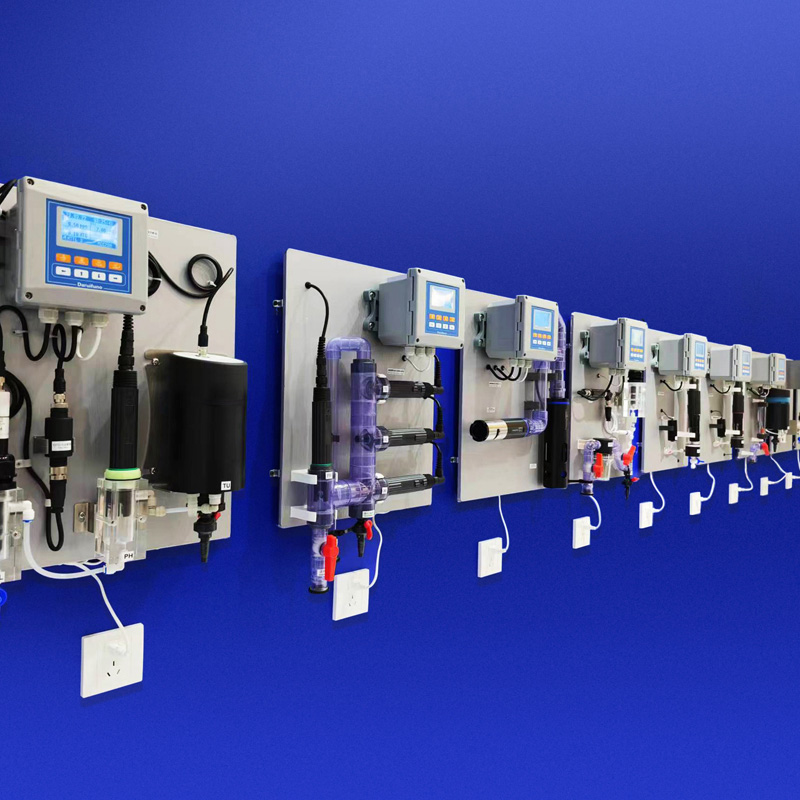
Supports a wide array of ion-selective electrodes (ISE), including Fluoride (F⁻), Chloride (Cl⁻), Nitrate (NO₃⁻), and Calcium (Ca²⁺) with customizable ranges up to 1000 mg/L.
Built-in pH/temperature sensor and optional reference electrodes to provide automatic compensation, ensuring data accuracy of ±5% of the measured value even in fluctuating chemical environments.
Equipped with an integrated mechanical cleaning wiper consuming only 1.5W, designed to prevent mineral scaling and biofouling on the sensitive ion membrane for extended maintenance-free operation.
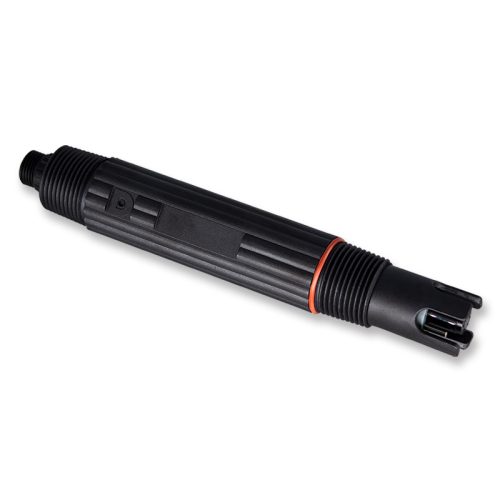
Chloride ion (Cl-)
2-5 weeks
1
Contact Us
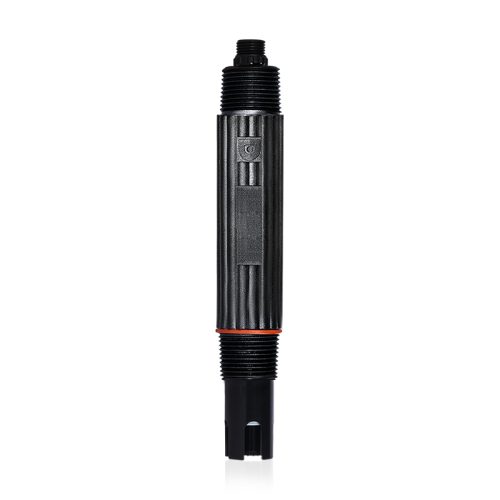
F⁻
2-5 weeks
1
Contact Us
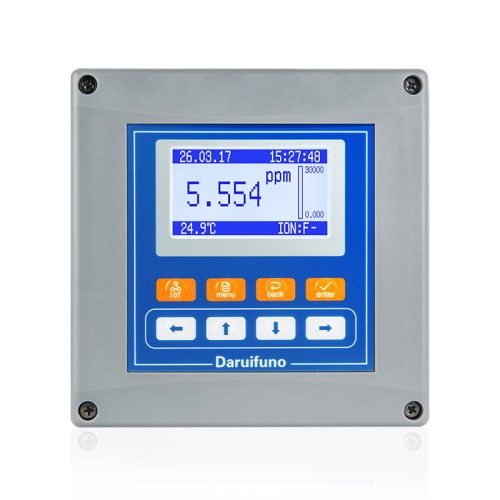
14 Types of Ions
2-5 weeks
1
Contact Us


Download full technical datasets or contact our engineers for a custom quote today.
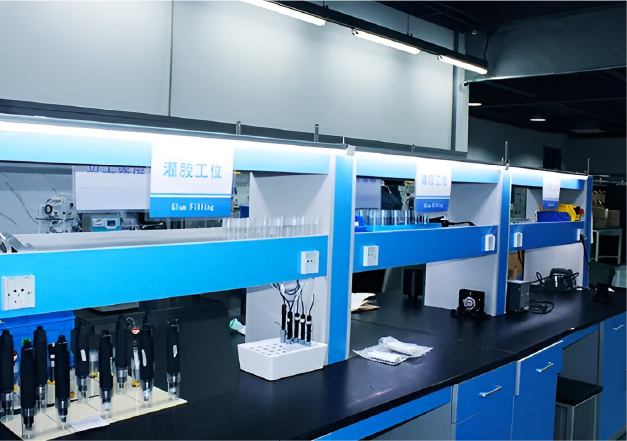
Our ion-selective electrode series covers more than 10 key parameters, ranging from surface water monitoring to industrial electroplating and food processing. A single electrode can handle harsh environments with pH 2-12 and temperatures 0-80°C, achieving accurate response over a wide range. The entire series utilizes a PPS housing and solid-state/PVC sensitive membrane technology, coupled with a rapid response of <30 seconds and a high resolution of 0.1mV, ensuring long-term stability and repeatability in complex matrices such as wastewater treatment, chemical reactions, and soil analysis.
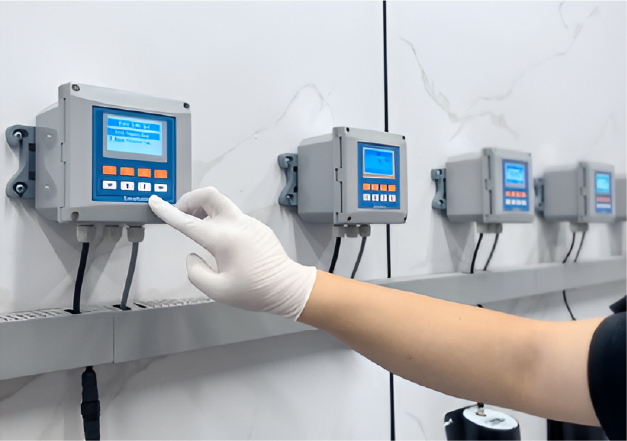
Equipped with a dual SPST relay with programmable hysteresis supporting a maximum load of 3A/250V AC, the controller enables precise automated dosing through configurable high/low limit and hysteresis settings. Ensure safe production and comply with emission regulations.
Features a high-precision, isolated 4-20mA analog output for long-distance telemetry with a maximum load capacity of 1000Ω, ensuring stable signal transmission to PLC systems without ground loop interference.


Chemical etching and electroplating plants in Vietnam struggle with inaccurate manual dosing, seeking to automate fluoride and cyanide removal to ensure strict environmental compliance while reducing reagent costs.
The APION Intelligent Controller is integrated with ASX4110 Fluoride & ASX4220 Cyanide Solid-State Sensors for real-time dosing feedback.
Achieved 30% reduction in chemical consumption and 100% discharge compliance through precise automated dosage control.

Semiconductor manufacturing facilities in Singapore require ultra-stable, real-time monitoring of ammonium and fluoride ions in complex wastewater to prevent membrane fouling and ensure continuous, high-volume production.
MCC500 Multi-Channel Control Hub Managing a Network of 18 ASX4120 Ammonium Sensors via RS485 Modbus RTU.
Protects $100k+ RO membrane assets and prevents millions in losses from unplanned production downtime.

Mining and metal processing plants in South Africa discharge high concentrations of fluoride and chloride, where manual sampling fails to detect rapid ionic shifts that can cause equipment damage and heavy environmental penalties.
Deploying API2 digital ion controllers with ASX4110 fluoride and ASX4130 chloride sensors provides continuous, reagent-free monitoring to trigger immediate treatment adjustments and protect critical infrastructure from ionic corrosion.
Real-time fluoride and chloride monitoring has extended the lifespan of heat exchangers by 25% and prevented 100% of regulatory fines associated with wastewater discharge. Optimizing chemical dosing based on continuous ionic data reduced water treatment overheads by 15%, ensuring both operational cost efficiency and strict environmental compliance.
The scientific principle of online water quality ion detection primarily utilizes advanced ion-selective electrode (ISE) methodology to quantify specific target ion concentration levels in real time. The electroanalytical framework relies on a specialized potentiometric semi-permeable membrane embedded with specific ionophores, which selectively bind with target cations or anions while blocking background matrix interferences. As target ions accumulate at the phase boundary, a localized electrical potential difference is established against an integrated silver/silver chloride (Ag/AgCl) reference electrode, generating a stable millivolt (mV) output that strictly complies with the logarithmic Nernst equation.
To maintain high measuring accuracy in variable industrial effluents and wastewater treatment applications, the intelligent ion sensor network incorporates real-time analytical correction. Because background temperature variations directly affect ionic activity and sensor slope, integrated transmitters dynamically execute continuous temperature compensation algorithms to eliminate drift. This reagent-free electrochemical monitoring method delivers continuous data logging and fast response times, serving as an efficient and low-maintenance solution for water quality tracking, process automation, and environmental discharge compliance.
Our commitment to green chemistry is driven by reagent-free Ion-Selective Electrode (ISE) technology, which fosters a circular economy by completely eliminating secondary chemical waste. By providing precision monitoring without environmental loading, we empower sustainable water management to preserve the integrity of natural aquatic ecosystems for a cleaner future.
Reliable Answers: Optimizing Your Process Control with Proven Expertise.

English

French

German

Portuguese

Spanish